I’ve been looking for meals that don’t take too much effort but still feel satisfying, and chickpea and spinach curry has become one of those go-to dishes for me. It doesn’t need a long list of ingredients, and the cooking process is straightforward enough that you can make it even on a busy evening.
It’s something I usually prepare for dinner because it’s filling, but I’ve also had it for lunch when I wanted something warm and comforting. The nice part is that it works well whether you’re cooking just for yourself or sharing with others. Next, I’ll explain more about what chickpea and spinach curry actually is.
What is Chickpea and Spinach Curry?
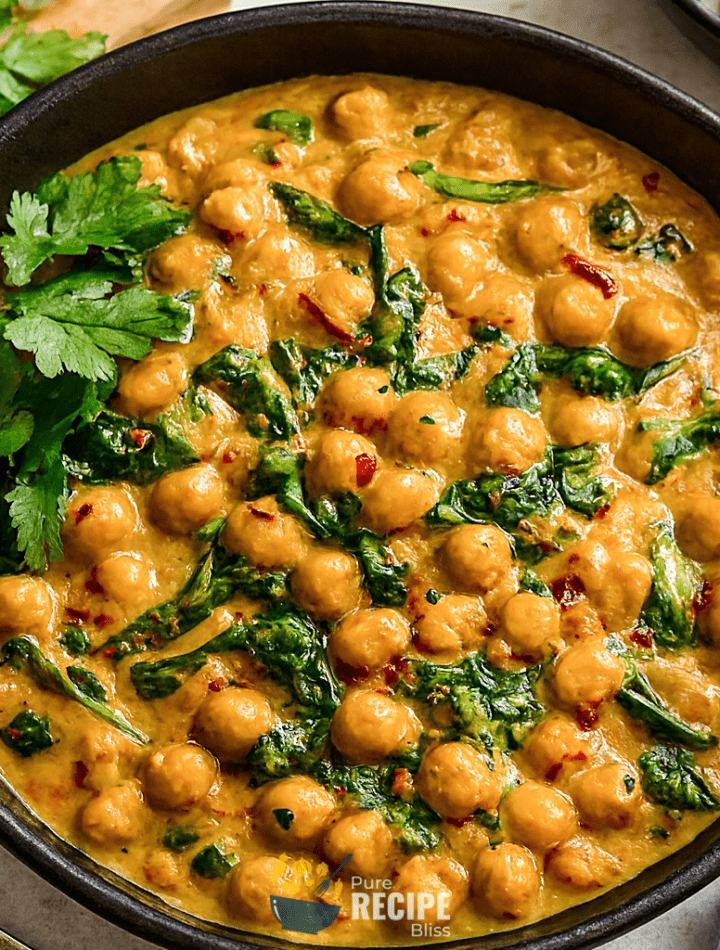
Chickpea and spinach curry is basically a warm, savory dish made by simmering chickpeas with spices, coconut milk, and fresh spinach until everything blends into a creamy sauce. It’s not complicated at all, but it feels like a complete meal because you get protein from the chickpeas and greens from the spinach in one pot.
Most of the time, people enjoy it with rice or flatbreads like naan, since those soak up the sauce really well. I’ve also seen it served with things like roasted potatoes or even just on its own in a bowl when you want something lighter. It’s a dish that fits easily into everyday cooking, and it works whether you’re cooking for yourself or sharing with family.
Why You’ll Love This Recipe:
- Quick to make: Chickpea and spinach curry doesn’t take much time at all, and you can have it ready in about half an hour, which makes it easy to fit into a regular day when you don’t want to spend too long cooking.
- Balanced and filling: Since chickpeas bring protein and spinach adds greens, the dish feels complete without needing a lot of extras, and that makes it satisfying enough for a main meal.
- Flexible with sides: You can serve it with rice, naan, or even something like roasted potatoes, and I’ve noticed it works well no matter which side you choose.
- Good for leftovers: It keeps well in the fridge, and I’ve reheated it a couple of times without losing flavor, so it’s nice when you want to plan ahead.
- Easy to adjust: I’ve tried adding a little more spice one time and cutting back another, and both versions turned out fine, so it’s not a recipe that punishes small changes.
Ingredients Needed:
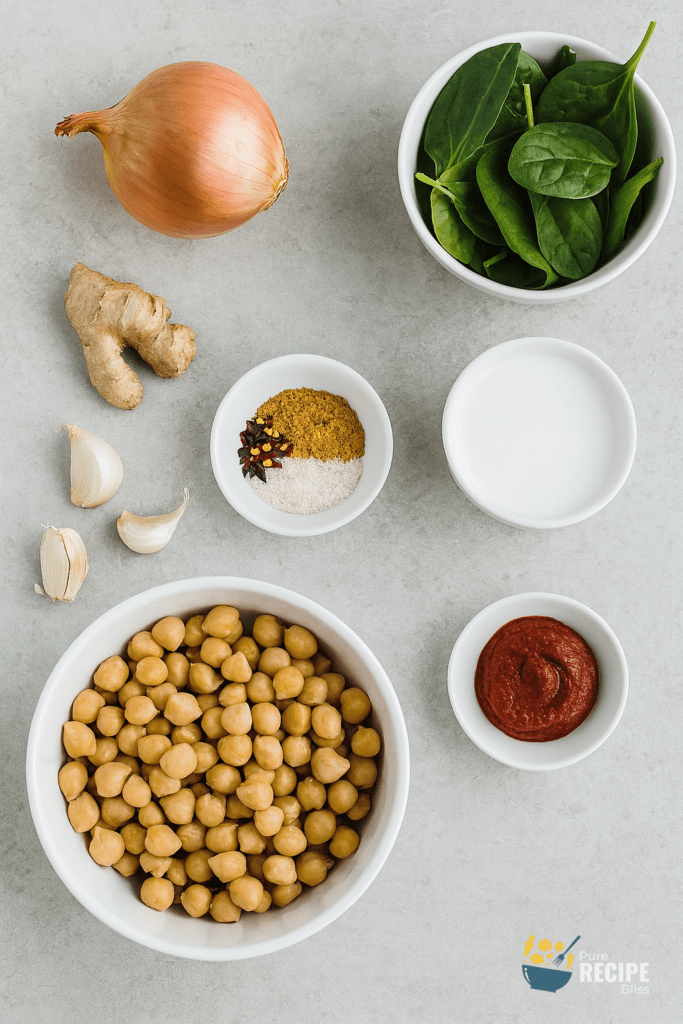
- Chickpeas: You’ll need canned chickpeas, and I usually rinse them well before adding. They give the curry its protein and make it filling without needing meat.
- Spinach: Fresh spinach works best because it wilts nicely into the sauce, but I’ve tried frozen once and it was fine as long as I squeezed out the extra water.
- Onion: A diced onion helps build the base flavor, and I’ve noticed that cooking it until soft makes the curry taste smoother.
- Garlic and Ginger: These two add a lot of fragrance, and I like to chop them a bit chunky so they don’t disappear completely in the sauce.
- Curry Powder: You can use mild or hot depending on what you prefer. I once added a little extra and it made the curry stronger, so adjust carefully.
- Tomato Paste: This thickens the sauce, and if you don’t have paste, a spoon of purée or even crushed tomatoes can work, though the texture changes slightly.
- Coconut Milk: It makes the curry creamy, and I usually go for full-fat because it gives a richer taste, but light coconut milk works too.
- Broth: Either vegetable or chicken broth is fine. I’ve used water with a stock cube when I didn’t have broth ready, and it still turned out good.
- Salt and Pepper: These are just for seasoning, but I’ve learned that adding salt early helps the flavors come together better.
💡 Note: For the full ingredient list with exact amounts and measurements, please check the recipe card below.
Step-By-Step Instructions to Make Chickpea and Spinach Curry:
Before I go into the steps, I should mention one small thing I learned when I tried this at home. I once added the spinach too early, and it ended up overcooked and kind of mushy, so now I always wait until the sauce is almost done before stirring it in. That way, the spinach keeps a fresher taste and better texture.
Step 1: Sauté the base
Start by warming a little oil in a pan, then add the onion. Cook it slowly until it looks soft and slightly golden because that’s when the flavor really develops. After that, add garlic and ginger, and stir until you can smell them strongly.
Step 2: Build the flavor
Sprinkle in the curry powder and salt, and stir so the spices coat the onion mixture. Add tomato paste and mix until the color turns deeper and the paste blends in. The mixture should look glossy at this point.
Step 3: Make the sauce
Pour in coconut milk and broth, and stir everything together. Use your spoon to scrape the bottom of the pan so nothing sticks. The sauce should look smooth and creamy, and you’ll notice the color changing to a rich golden shade.
Step 4: Add the chickpeas
Stir in the chickpeas and let them simmer gently. This is when they soak up the flavor, so give them a few minutes. The sauce should thicken slightly as it cooks.
Step 5: Finish with spinach
Finally, add the spinach and stir until it wilts into the sauce. Don’t rush this step, but also don’t let it cook too long. The leaves should look soft but still bright green.
Step 6: Taste and adjust
Before serving, taste the curry and adjust with a little more salt or spice if needed. I sometimes add a pinch of red pepper flakes here if I want extra heat.
💡 Note: These steps are just an overview. For detailed quantities, measurements, and exact timings to make this recipe, please check the recipe card below.
Helpful Tips For The Best Results:
- Control the heat: Keep the pan at medium heat when starting out because onions burn quickly, and once they burn, the whole curry tastes bitter.
- Texture check: When adding coconut milk, stir until the sauce looks smooth and glossy. If it looks grainy, keep stirring until it blends better.
- Spinach timing: Add spinach near the end so it stays bright green. If you add it too early, it turns mushy and loses flavor.
- Ingredient swap: If you don’t have coconut oil, olive oil works fine. I’ve tried both, and the difference is small enough that it doesn’t change the dish much.
- Seasoning balance: Taste before serving and adjust salt or spice. I once skipped this step, and the curry felt flat, so it’s worth checking.
Tasty Variations to Try:
- Extra spice: Add turmeric or cumin for a deeper flavor. I’ve tried cumin once, and it gave the curry a slightly earthy taste.
- Vegetable boost: Toss in peas, bell peppers, or cauliflower. These cook quickly and make the curry more colorful.
- Protein option: If you’re not strictly vegetarian, grilled chicken or paneer cubes can be added for variety.
- Seasonal twist: In colder months, I like adding sweet potatoes because they make the curry sweeter and more filling.
- Dietary swap: Use light coconut milk if you want fewer calories, or swap spinach for kale if that’s what you have.
- Fresh garnish: A squeeze of lemon or a handful of cilantro at the end brightens the flavor, and I usually add this when reheating leftovers to freshen them up.
Serving Suggestions:
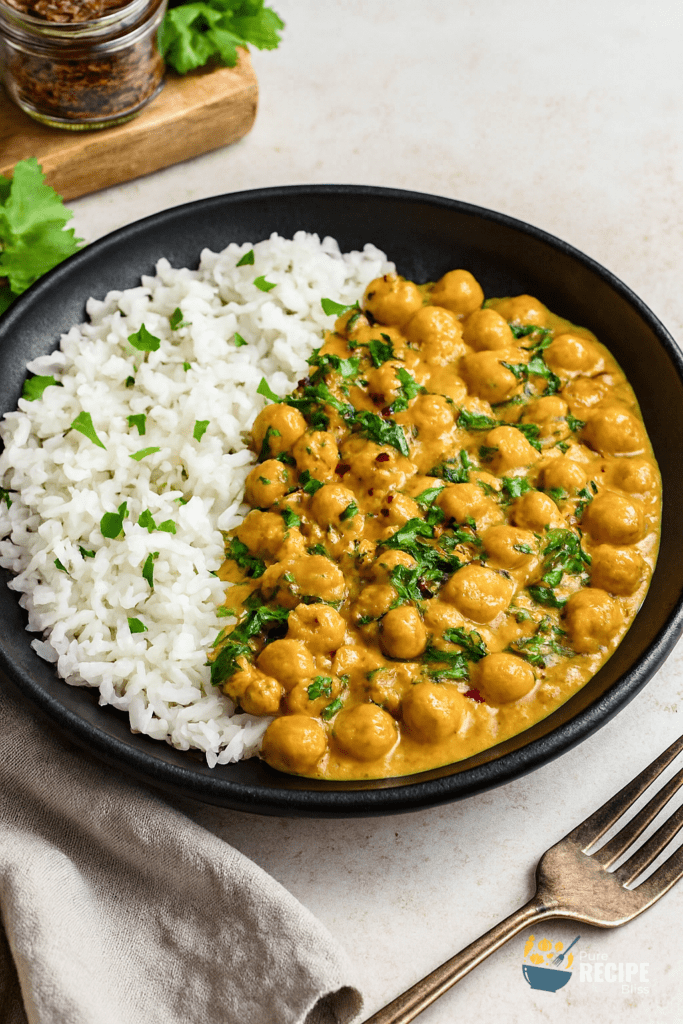
1. Serve with rice:
Chickpea and spinach curry pairs really well with plain basmati or brown rice because the sauce soaks in nicely and makes the meal more filling.
2. Perfect with flatbreads:
Naan or roti works great for scooping up the curry, and I usually keep some on the side since it makes eating easier and more fun.
3. Pairs well with extras:
A small salad, roasted potatoes, or even a spoon of yogurt on the side balances the flavors, and I’ve found it makes the meal feel more complete.
4. Good for sharing:
This dish works well for family dinners or casual get-togethers since it’s easy to serve in one big pot and everyone can help themselves.
Storage & Reheating Tips:
- Fridge storage: Chickpea and spinach curry keeps well in the fridge for several days if you let it cool first and then place it in a sealed container.
- Freezer option: You can freeze it in portions, and I’ve found that smaller containers make reheating easier later.
- Reheating on stovetop: Warm it gently in a pan with a splash of water or broth so the sauce doesn’t get too thick.
- Microwave reheating: If you’re short on time, heat it in a microwave-safe bowl, stirring halfway through so it warms evenly.
Frequently Asked Questions (FAQ):
-
Can I use dried chickpeas instead of canned?
Yes, but you’ll need to soak and cook them first. I tried it once, and while the flavor was good, it added extra time, so canned chickpeas are easier for quick meals.
-
Can I make chickpea and spinach curry ahead of time?
Absolutely. It stores well in the fridge, and I’ve noticed the flavors taste even stronger the next day, so it’s fine to prepare in advance.
-
What if the sauce feels too thin?
Let it simmer a little longer, and it usually thickens. I sometimes add an extra spoon of tomato paste if I want it thicker faster.
-
Is this curry dairy-free and gluten-free?
Yes, it’s naturally dairy-free, and if you use gluten-free broth, it works for gluten-free diets too.
-
Can I swap spinach for another green?
Kale or Swiss chard both work fine. I’ve tried kale once, and it held up better in the sauce without getting too soft.
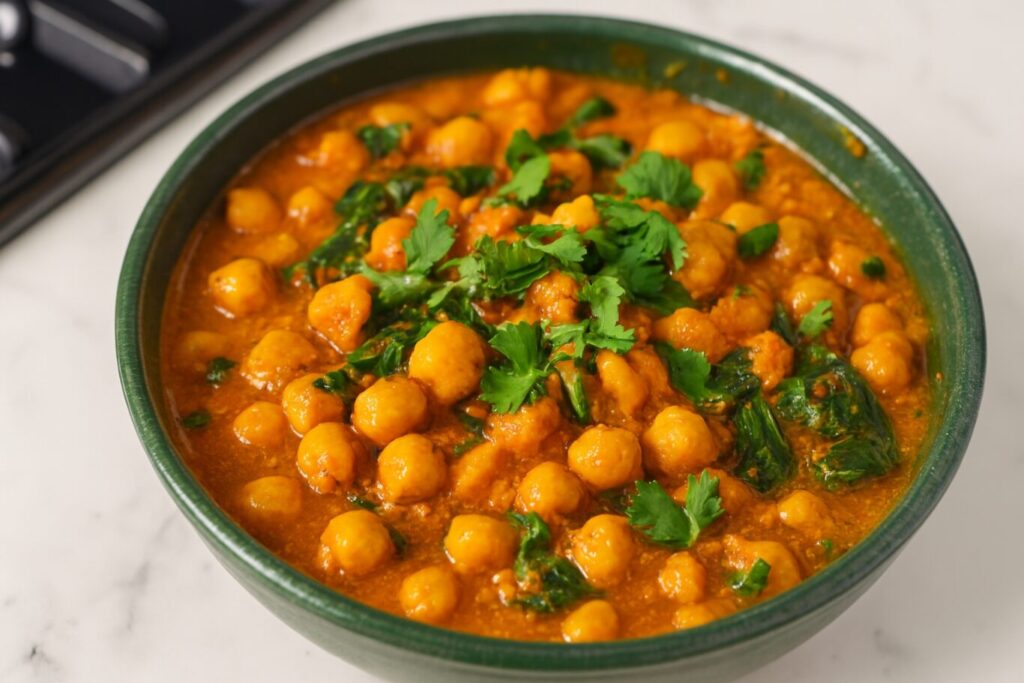
Chickpea and Spinach Curry
Description
Chickpea and spinach curry is a simple one-pot dish made with chickpeas, spinach, coconut milk, and spices. It’s quick to prepare, filling enough for dinner, and reheats well for meal prep.
Ingredients
Instructions
- Heat 1 tablespoon coconut oil in a large skillet over medium heat. Add 1 medium diced onion and cook until soft and lightly golden.
- Stir in 4 sliced garlic cloves and 1-inch minced ginger, cooking until fragrant.
- Add 1 ½ tablespoons curry powder and ½ teaspoon salt, mixing well. Stir in 1 tablespoon tomato paste until the mixture looks glossy.
- Pour in 1 (14 oz) can coconut milk and ½ cup broth (vegetable or chicken), scraping the bottom of the pan to release flavor. Stir until smooth.
- Add 2 (15 oz) cans chickpeas, rinsed and drained, stir, and let simmer for about 10 minutes so they absorb the spices.
- Stir in 2 cups chopped spinach and cook until wilted but still bright green.
- Taste and adjust seasoning if needed. Garnish with fresh cilantro before serving.
Notes
- If using frozen spinach, thaw and squeeze out excess water before adding.
- Full-fat coconut milk gives a richer taste, but light coconut milk works too.
- For extra heat, add red pepper flakes or a pinch of cayenne at the end.
Nutrition Facts
Servings 4
Serving Size 1 bowl
- Amount Per Serving
- Calories 287kcal
- % Daily Value *
- Total Fat 14g22%
- Total Carbohydrate 32g11%
- Dietary Fiber 10g40%
- Sugars 3g
- Protein 11g22%
- Vitamin A 2400 IU
- Vitamin C 18 mg
- Calcium 90 mg
- Iron 4 mg
* Percent Daily Values are based on a 2,000‑calorie diet, and your daily needs may be higher or lower depending on your lifestyle. Nutrition information is shared only as a general estimate and may not always be fully accurate. If you follow a special diet or have specific health concerns, it’s best to check with a registered dietitian for personalized guidance.